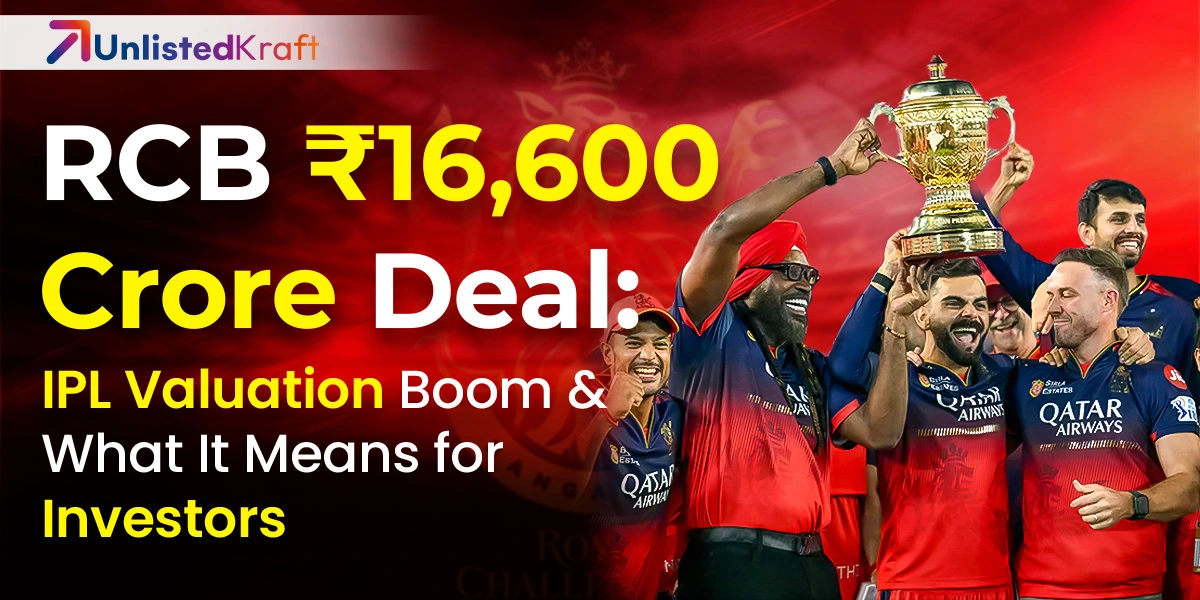
As per the latest update (May 2026), the Rajasthan Royals IPL franchise has been sold to a consortium led by steel tycoon Lakshmi Mittal and his family, along with Adar Poonawalla, in a deal valued at approximately USD 1.65 billion (₹15,660 crore). Rajasthan Royals Sold To Mittal Family For Rs 15,600 Crore After Somani Deal Falls Through.
This deal covers the IPL team, Paarl Royals (SA20), and Barbados Royals (CPL), with completion expected in Q3 2026.
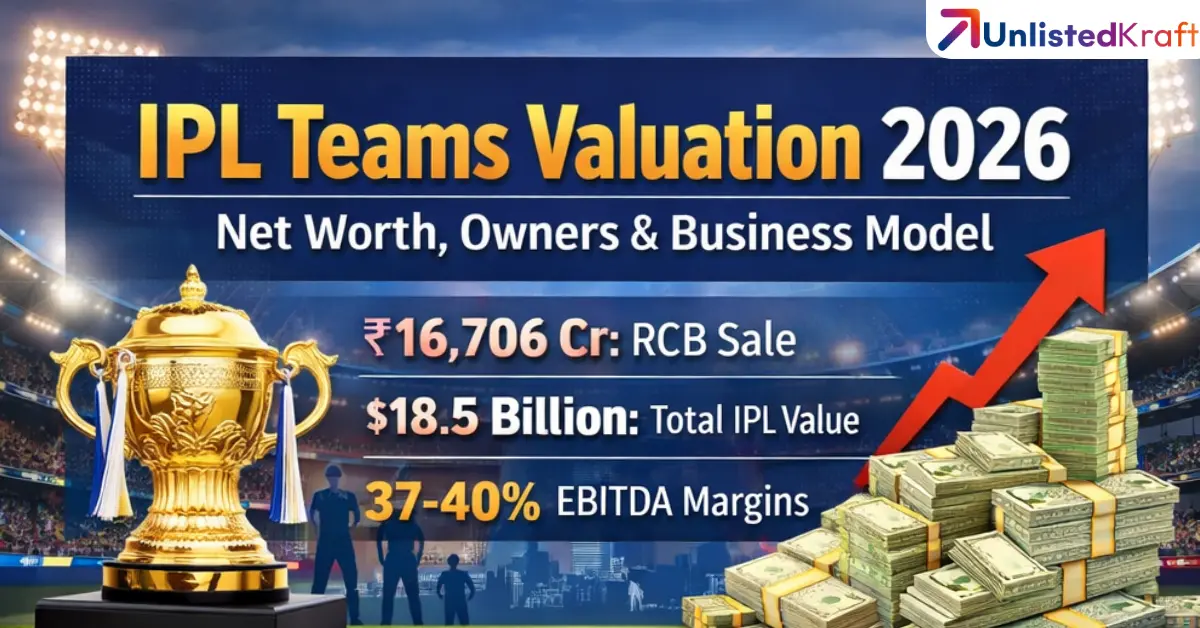
These aren’t just cricket teams. They are premium sports-media assets delivering annuity-like cash flows, 37-40% EBITDA margins, and capital appreciation that outpaces many traditional investments.
For HNIs and ultra-HNIs seeking diversification, brand synergy, prestige, and high-IRR opportunities, IPL ownership (or stakes) has become a must-consider asset class.
This guide delivers the A-to-Z of IPL finances, from central revenue pools to team-specific monetisation, valuations, ownership history, recent mega-deals, ROI case studies, and legal pathways to invest in 2026.
Note: This article is for serious investors, HNIs, ultraHNIs, and readers who want to analyse the IPL from a financial and investment angle, as complex terms have been used throughout the article.
The league now has 10 teams (8 original from 2008 + Gujarat Titans and Lucknow Super Giants added in 2022 via a competitive bidding process). No further expansion is confirmed for the near term.
The following are the current teams in 2026:
Logo
Team
Captain
Chennai Super Kings (CSK)
Ruturaj Gaikwad
Delhi Capitals (DC)
Axar Patel
Gujarat Titans (GT)
Shubman Gill
Kolkata Knight Riders (KKR)
Ajinkya Rahane
Lucknow Super Giants (LSG)
Rishabh Pant
Mumbai Indians (MI)
Hardik Pandya
Punjab Kings (PBKS)
Shreyas Iyer
Rajasthan Royals (RR)
Riyan Parag
Royal Challengers Bengaluru (RCB)
Rajat Patidar
Sunrisers Hyderabad (SRH)
Pat Cummins* (Ishan Kishan captaining the first phase)
Key Financial Drivers (2025-26 Data)
The following are the key financial drivers for IPL:
Central Revenue Pool (BCCI-managed): Media rights (2023-27 cycle: approximately INR 48,390 crore total), title sponsorships (approximately INR 500 crore/year). BCCI retains approximately 50%; the rest is distributed equally among 10 teams, which is approximately INR 500 crore per franchise annually (stable, predictable cash flow).
Team-specific revenues: Jersey sponsorships, match-day tickets/hospitality, merchandising, digital rights, stadium advertising, which gives approximately INR 100-200 crore+ per top team.
Typical franchise revenue: INR 600-700 crore/year (top teams higher).
Margins: 37-40% EBITDA (up from early losses).
IPL ecosystem value: USD 18.5 billion (Houlihan Lokey 2025 study, +12.9% YoY growth at the time).
Media rights for 2028-32 are projected to plateau at approximately USD 5.4 billion (per Media Partners Asia), but franchise values continue rising due to proven cash flows, digital viewership (500 million+ unique viewers), and global investor appetite.
IPL Franchise Valuation Snapshot as of April 2026
The following table summarises IPL franchise valuation as of April 2026:
The two 2026 mega-deals (RCB & RR) alone delivered 16x–24x returns on original 2008 investments, proving IPL franchises as high-alpha assets.
Brand values (Houlihan Lokey 2025) represent conservative estimates; actual transaction prices are significantly higher.
Newer 2022 franchises (GT & LSG) are still in the early appreciation phase with a strong growth runway.
All data cross-verified from BCCI/IPL announcements, March 2026 transaction reports, and the latest independent valuation study.
IPL Champions Hall of Fame (2008–2025)
Complete list of every IPL winner, runner-up, final venue, and margin of victory. A must-know dataset for investors tracking franchise performance, brand equity, and long-term valuation drivers.
Year
Winner
Runner-Up
Final Venue
Margin of Victory
2025
Royal Challengers Bengaluru (RCB)
Punjab Kings (PBKS)
Narendra Modi Stadium, Ahmedabad
Won by 6 runs
2024
Kolkata Knight Riders (KKR)
Sunrisers Hyderabad (SRH)
M. A. Chidambaram Stadium, Chennai
Won by 8 wickets
2023
Chennai Super Kings (CSK)
Gujarat Titans (GT)
Narendra Modi Stadium, Ahmedabad
Won by 5 wickets
2022
Gujarat Titans (GT)
Rajasthan Royals (RR)
Narendra Modi Stadium, Ahmedabad
Won by 7 wickets
2021
Chennai Super Kings (CSK)
Kolkata Knight Riders (KKR)
Dubai International Cricket Stadium
Won by 27 runs
2020
Mumbai Indians (MI)
Delhi Capitals (DC)
Dubai International Cricket Stadium
Won by 5 wickets
2019
Mumbai Indians (MI)
Chennai Super Kings (CSK)
Rajiv Gandhi International Stadium, Hyderabad
Won by 1 run
2018
Chennai Super Kings (CSK)
Sunrisers Hyderabad (SRH)
Wankhede Stadium, Mumbai
Won by 8 wickets
2017
Mumbai Indians (MI)
Rising Pune Supergiant
Rajiv Gandhi International Stadium, Hyderabad
Won by 1 run
2016
Sunrisers Hyderabad (SRH)
Royal Challengers Bengaluru (RCB)
M. Chinnaswamy Stadium, Bangalore
Won by 8 runs
2015
Mumbai Indians (MI)
Chennai Super Kings (CSK)
Eden Gardens, Kolkata
Won by 41 runs
2014
Kolkata Knight Riders (KKR)
Kings XI Punjab (now PBKS)
M. Chinnaswamy Stadium, Bangalore
Won by 3 wickets
2013
Mumbai Indians (MI)
Chennai Super Kings (CSK)
Eden Gardens, Kolkata
Won by 23 runs
2012
Kolkata Knight Riders (KKR)
Chennai Super Kings (CSK)
M. A. Chidambaram Stadium, Chennai
Won by 5 wickets
2011
Chennai Super Kings (CSK)
Royal Challengers Bengaluru (RCB)
M. A. Chidambaram Stadium, Chennai
Won by 58 runs
2010
Chennai Super Kings (CSK)
Mumbai Indians (MI)
Wankhede Stadium, Mumbai
Won by 22 runs
2009
Deccan Chargers
Royal Challengers Bengaluru (RCB)
Wanderers Stadium, Johannesburg
Won by 6 runs
2008
Rajasthan Royals (RR)
Chennai Super Kings (CSK)
Wankhede Stadium, Mumbai
Won by 3 wickets
Key Investor Insights from the table
Most successful franchises: Mumbai Indians (5 titles), Chennai Super Kings (5 titles), Kolkata Knight Riders (3 titles). Multiple titles have directly correlated with sustained brand value growth and higher central revenue leverage.
Breakthrough moments: RCB’s maiden title in 2025 (after 18 years) delivered a massive valuation uplift, seen in their record $1.78 billion sale just months earlier.
Newer teams shining: Gujarat Titans won in their debut year (2022) and reached finals again in 2023, proving rapid ROI potential for fresh franchises.
Defunct/legacy note: Deccan Chargers (2009 winner) was later replaced by Sunrisers Hyderabad; Kings XI Punjab rebranded to Punjab Kings.
Current IPL Franchise Ownership Snapshot in April 2026
Original 2008 franchises still dominate (6 out of 10), but 2026 has seen two landmark exits to high-profile consortia, signalling maturing liquidity and global investor interest.
Recent mega-deals (RCB & RR) demonstrate 16–24x returns on original investments.
Ownership is shifting from pure celebrity/promoter models toward institutional, PE, and family-office structures, ideal for scalable synergies and professional management.
Highlight Reel of Recent Changes:
RCB Deal (March 2026): Sold for USD 1.78B to a powerhouse consortium. Includes men’s IPL & WPL team. Diageo (which inherited it post-Mallya) exited strategically. Vijay Mallya’s public reaction: “When I bought the franchise in 2008 for INR 450 crores, most people laughed, immensely gratifying to see my INR 450 crore investment grow to INR 16,500 crores.”
RR Deal (same week): USD 1.63B to US-led group. Early investors saw outsized returns, e.g., Lachlan Murdoch’s 13% stake (approximately USD 2.3M original) now worth approximately USD 210M (92x).
Siguler Guff doubled its money in under a year
RedBird Capital is approximately 6.5x in five years.
These deals prove IPL franchises are now global sports assets attracting US PE, family offices, and Indian industrials.
The Money Machine: How Franchises Generate & Distribute Wealth
Let us do a deep dive into the wealth generation from IPL
Revenue Breakdown (per team, typical top performer)
Central pool (media + sponsorships): 70-75% (approximately INR 500 cr)
Portfolio diversification (low correlation to traditional markets; sports assets globally outperform in certain cycles).
WPL upside (women’s league adds incremental value; RCB’s double championship boosted its sale).
How Ultra-HNIs & HNIs Can Invest in IPL in 2026
IPL ownership is not publicly traded and requires BCCI approval (fit-and-proper test, no conflicts, regulatory clearances). FDI up to 100% is allowed (subject to Press Note 3 restrictions on neighbouring countries).
Legal Routes:
Full acquisition of an existing franchise (via negotiated sale, BCCI-approved, as in RCB/RR 2026).
Minority/consortium stake (common in recent deals; PE funds often lead).
New franchise bidding (only when BCCI expands, last in 2022; not imminent).
Indirect exposure via PE funds or SPVs investing in franchises (liquidity via eventual sale/IPO).
Entry Ticket
USD 1B+ for full control today (or significant minority). Due diligence focuses on revenue contracts, player roster economics, stadium rights, and BCCI/IPL regulations.
Exit Options
Full/partial sale, strategic merger, or future IPO (none listed yet, but increasingly discussed).
Risks to Note
Media rights plateau, geopolitical/viewership shocks, regulatory changes, high competition for talent. Mitigated by central pool stability and league growth.
Summary
IPL has evolved from a “20-over tamasha” into a mature, high-margin sports-media business with global comparables (think NBA/English Premier League valuations but with India’s cricket monopoly).
Record 2026 deals, institutional money flooding in, and proven 15%+ IRR (outpacing Sensex in USD terms for RCB) make it compelling.
For ultra-HNIs, it offers trophy asset status as well as a financial alpha. For conglomerates, instant consumer connect. The next media rights cycle and potential listings will be the next catalysts.
Whether you’re eyeing a full franchise or strategic stake, IPL ownership in 2026 is no longer a gamble. It’s a calculated, high-conviction play on India’s most passionate industry. The numbers don’t lie: from “madness” in 2008 to billions in 2026, the returns speak for themselves.
Frequently Asked Questions
What kind of returns have early IPL investors actually seen?
The most dramatic example is Royal Challengers Bengaluru (RCB). Vijay Mallya acquired the franchise in 2008 for ₹450 crore ($111.6 million). In March 2026, it was sold in an all-cash deal for $1.78 billion (≈ ₹16,706 crore), delivering a 37x return in INR and roughly 16x in USD terms over 18 years.
Rajasthan Royals (RR) delivered an even higher 24x multiple when it sold for $1.65 billion (≈ ₹15,600 crore) in May 2026. These are not outliers; multiple franchises have generated 10–24x capital appreciation plus steady 37–40% EBITDA margins and annual cash distributions from the central revenue pool.
How much does it cost an HNI or ultra-HNI to own or invest in an IPL team today?
Full ownership of a top franchise now commands $1.5–2 billion+ (₹14,000–18,000+ crore) based on the March 2026 RCB and RR transactions. Minority or consortium stakes (increasingly popular with global PE and family offices) typically start at $200–500 million, depending on the percentage and team.
There is no public market, so entry happens only through negotiated private sales or BCCI-approved consortium bids. New franchise auctions occur only when the IPL expands; the last round was in 2022.
What are the main revenue streams, and why are IPL franchises so profitable?
Each franchise receives a guaranteed ≈ ₹500 crore per year from the BCCI’s central revenue pool (media rights + title sponsorships), which covers 70–75% of total income and acts like a high-yield annuity.
The remaining 25–30% comes from team-specific sources: jersey and digital sponsorships, match-day hospitality, merchandising, and stadium advertising. Top teams generate ₹600–700 crore in annual revenue with 37–40% EBITDA margins — far higher than most traditional Indian businesses — while benefiting from 500 million+ digital viewers and WPL synergies.
Who can legally invest in IPL teams, and what is the process?
Any Indian or foreign investor (including HNIs, family offices, PE funds, and corporates) can participate subject to BCCI’s “fit-and-proper” test, regulatory clearances, and FDI norms (100% allowed except for entities from certain neighbouring countries). The process involves: (i) due diligence on revenue contracts and stadium rights, (ii) BCCI approval, and (iii) execution of a share purchase or consortium agreement.
Recent examples include the Aditya Birla–Blackstone–Times Group consortium acquiring RCB and the US Walton/Ford family-led group taking RR in March 2026. Direct listing or IPO is not yet available, but partial exits via secondary sales are common.
Are IPL franchises still a good investment in 2026 and beyond?
Yes, for the right investor. The league’s ecosystem is now valued at $18.5 billion and growing 12–15% annually. The next media rights cycle (2028–32) is expected to sustain high central distributions, while franchise values are projected by industry voices (including Delhi Capitals co-owner Parth Jindal) to reach $4–5 billion each within a decade.
Key attractions: predictable cash flows, low correlation to equity markets, brand synergies for conglomerates, prestige value, and proven liquidity through global PE interest. Risks (media-rights plateau, regulatory changes) exist but are mitigated by the BCCI’s equal-revenue model and cricket’s monopoly status in India.
Author: Diwakar Singh
Diwakar Kumar Singh is a BFSI specialist and finance writer with over 7 years of hands-on experience in financial research, content creation, and analysis.
A Gold Medalist in MBA (Marketing) from IMT, he combines deep analytical skills with practical insights gained from evaluating companies, IPOs, unlisted shares, financial ratios, and investment opportunities. Diwakar has personally analysed hundreds of financial instruments and market scenarios, which he uses to break down complex topics into clear, actionable advice.
He has authored numerous in-depth finance articles, published multiple books internationally, and contributed to research publications. His work focuses on helping everyday investors and readers make better-informed financial decisions through well-researched, evidence-based explanations that are always grounded in real-world application rather than theory alone.
 amit@unlistedkraft.in
 +91-8796470040
 +91-8796470040